Abatement contractor software

Abatement contractor software for crews and records

Do it right. Show it was done right.

Appello is the field-to-office system for asbestos, mould and lead abatement contractors who run their own crews. It tracks every worker's tickets, puts your required daily forms and photos on every job, gets T&M signed on site, and runs union timesheets and job costing in one place.

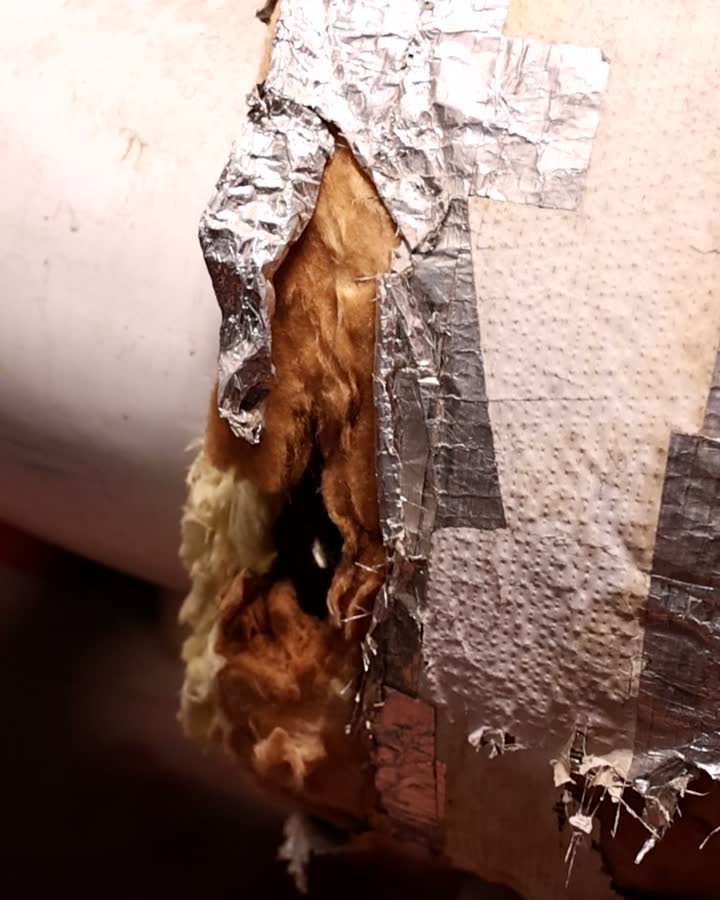
Background: Footage from a real customer job. The phone shows a worker's certifications in the Appello app. App screens use a fictional sample company.

Straight answer first

What Appello records, and what it doesn't

Abatement is a regulated trade, so it matters what software claims. Here's the line.

Appello records what your crew does

  • Who was scheduled and who clocked in, at which site and when.
  • Each worker's certifications, with expiry dates and card scans.
  • The forms you build from your own procedures, required per job, with photos, signatures, GPS and time on every submission.
  • Signed T&M work orders, change orders and the invoices that follow.
  • Which equipment was on the job, who had it, and its inspections.
  • Your consultant's reports, stored as files on the job.

Appello doesn't replace

  • Air sampling, lab analysis or clearance. That's your consultant and your lab.
  • Notices or permits you file with a regulator.
  • Waste manifests or disposal-site systems. You can record them on a form; Appello doesn't connect to those systems.
  • Your judgement on the type of operation or the procedures it needs.

How an abatement contractor runs

Small crews, strict rules, lots of paper

Abatement shops win work off a survey, send small certified crews into buildings that are often still occupied, and are judged at the end by their records as much as their work.

How you win work

  • Bids to building owners, general contractors and restoration companies, scoped from a hazardous materials survey and a consultant's specification: asbestos remediation (02 82 00), lead (02 83 00) and mould (02 85 00).
  • A good share of quotes go to several contractors bidding the same job, so you price the same scope more than once.
  • Estimates are built from man-hour ratios per task and per material, often in one large spreadsheet.
  • Emergency and restoration work after fires and floods comes in fast, with the scope still moving.

The kinds of jobs

  • Pre-demolition and renovation abatement, often inside occupied hospitals, schools and offices, on nights and weekends.
  • Pipe and boiler insulation removal and replacement, where abatement and thermal insulation are the same crew's week.
  • Mould remediation, lead paint, decontamination and biohazard clean-ups.
  • Small crews at several sites a day, and long jobs with a containment up for weeks.

Who's on the crew

  • A supervisor or foreman, abatement workers and labourers, each with the training and medical and fit-test records your province or state requires.
  • Union in many markets, with apprentice years, journeyperson, foreman and superintendent rates, and deductions to report by local.
  • Respirators, harnesses, HEPA vacuums and negative air machines that have to be signed out and looked after.
  • Project managers who estimate, run the job and deal with the consultant.

The rules behind the paperwork

  • Work is governed by rules like Ontario's O. Reg. 278/05 (Type 1, 2 and 3 operations) and the US OSHA asbestos standard for construction.
  • The consultant usually inspects, samples the air and signs the clearance. Your crew's job is to do the work right and show it.
  • Showing it means records: who was on site, with what training, which checks were done, and photos before and after.

When the work happens

  • School summers are the rush: everything has to come out before September.
  • Occupied buildings push work to nights and weekends.
  • Construction holidays and shutdowns empty the schedule for weeks at a time in some provinces.

How you get paid

  • Mostly progress billing on milestones, with holdback released at the end.
  • T&M sheets for extras, repairs and one-off customer requests: hundreds a year at a busy shop, each needing a customer signature.
  • Change orders when there's more material behind the wall than the survey showed.
  • Supplier invoices, sometimes hundreds a month, coded to jobs in the accounting system.

The close-out binder

Six tabs, filled as you go

The binder an owner or GC asks for at the end of an abatement job used to be built in the last week. In Appello each tab fills up during the job, from the work your crew is already doing.

Crew & tickets

Who worked the job, and their training, fit-test and site certifications with expiry dates and card scans.

Comes from: Training & compliance: the certification matrix and a branded training-record PDF package.

Daily forms

Hazard assessments, containment and negative air checks, decon logs, and any other procedure you turn into a form.

Comes from: Safety forms: required on the job, each submission a PDF with worker, time, GPS location and signatures.

Photos

Before, during and after. Containment up, waste bagged, area cleared.

Comes from: Photo questions on forms, and job notes with photos from the phone.

Consultant reports

Air sampling results, inspection reports and clearance letters from your consultant or lab.

Comes from: Uploaded to the job's files. Appello stores them; it doesn't produce them.

T&M & changes

Every extra, signed by the customer, and every change order, approved.

Comes from: Work orders with signatures, and numbered change orders on the job.

Equipment

Which HEPA vacuums and negative air units were on the job, who had them, and their inspections.

Comes from: Equipment: QR codes, check-in and check-out, inspection history.

The form builder: a section that only appears when an answer applies. Build your containment check the same way. App screens use a fictional sample company.
The certification matrix: the whole crew against every ticket on one screen. App screens use a fictional sample company.

What gets in the way

Ten things abatement contractors told us

Paraphrased from conversations with abatement, decontamination and insulation contractors who do both.

  1. 01

    Carbon-copy T&M sheets

    Handwritten, photographed, left on the dash or never signed by the customer. Unsigned means unpaid.

  2. 02

    Tickets in a binder

    An expired fit test or training card turns up at the gate, and the crew is short on a job that can't start without them.

  3. 03

    Daily checks on paper

    Containment and decon checks get done, but the sheets are scattered when the owner asks for them at close-out.

  4. 04

    Schedules sent as a picture, over and over

    Crews at several sites a day, and the schedule image gets re-sent every time something moves.

  5. 05

    Asbestos, mould and insulation hours mixed together

    Insurance and government reporting want them separate, and someone splits them by hand.

  6. 06

    Budgets that hide the crew mix

    Labour budgets kept in dollars at journeyperson rates hide overruns when the crew is mostly apprentices.

  7. 07

    Supplier invoices keyed twice

    Hundreds of bills a month typed into the accounting system, then again somewhere else to see job cost.

  8. 08

    Equipment signed out on trust

    HEPA vacuums, negative air units and respirators go out on paper, or on a handshake, and come back when they come back.

  9. 09

    Data sheets and deliveries lost in texts

    Product data sheet approvals and material requests sit in someone's phone.

  10. 10

    Union reports in a fragile spreadsheet

    Hours by local, by classification, every month, rebuilt from timesheets.

Bid to close-out

One abatement job, start to finish

Each stage of an abatement job, how it really goes, and the Appello feature that handles it. Everything named here is in the product today.

The form inbox: every submission, filterable by job, worker and result, with fails waiting on a resolution. App screens use a fictional sample company.
  1. 1

    Bid

    Price the scope from the survey

    The survey and the consultant's spec set the scope. You price it from man-hour ratios per task, often for several contractors bidding the same job.

    In Appello

    Log each bid as an estimate with a status and due date. Build it line by line with your ratios as quantities and rates, with markup, overhead and tax, or start bid-first with one number. Duplicate it when another GC asks for the same job.
  2. 2

    Award

    Set the job up by kind of work

    Asbestos, mould and insulation work get reported separately, so the job has to be set up that way from the start.

    In Appello

    Turn the won estimate into a job with the customer, contact and site carried across. Use a project or job-number prefix per kind of work, and cost codes for the tasks you report on.
  3. 3

    Requirements

    Tickets and forms the job demands

    This site needs abatement training, a current fit test and the owner's orientation. Every shift needs the same checks done and signed.

    In Appello

    Set the certifications the job requires. Build your containment, negative air and decon forms with the form builder and attach them as mandatory, so they show on every worker's job card as the day's to-do.
  4. 4

    Schedule

    The right people, warned in time

    Small crews at several sites a day, and one expired card can stop a job.

    In Appello

    Schedule by job, worker or day. The daily schedule shows each worker green, yellow or red against the job's required tickets. It warns you; it doesn't block you. Workers see their own week with the site address and directions on their phone.
  5. 5

    Field

    Checks, photos and signatures, as they happen

    Containment goes up, gets inspected, the decon is set, work starts. Every step needs a record.

    In Appello

    Crews complete the required forms on the phone. Photo questions capture the containment and the area; signatures are captured by PIN, or in person from someone without an Appello login. A fail on a pass/fail question carries a corrective action, and the submission is emailed to whoever you choose.
  6. 6

    Extras

    T&M signed before the crew leaves

    More material than the survey showed, a repair, a customer request. If it isn't signed today, it's a fight next month.

    In Appello

    Create a work order on the job with labour, material and equipment lines and photos. The customer signs on the phone, and the office generates the T&M invoice from it.
  7. 7

    Time

    Union rates, apprentice years, travel

    Ten-hour days, overtime after the weekly threshold, apprentice years and travel by zone, all from the agreement.

    In Appello

    Each timesheet row is priced from the worker's trade level and agreement, with overtime rule sets and break-time allowances applied. Geofenced clock-in flags punches away from the site. Approve at two levels, lock the week, export the payroll file.
  8. 8

    Equipment

    Units out, units back

    HEPA vacuums, negative air machines and respirators go from the shop to the job and, eventually, back.

    In Appello

    QR codes on each unit, check-in and check-out to a worker or job, pre-use inspections launched from the unit, and maintenance reminders on recorded hours.
  9. 9

    Cost & bill

    Hours, bills and the milestone draw

    Labour against a budget that reflects the real crew mix, supplier bills by job, and the milestone invoice with holdback.

    In Appello

    Approved hours land on the job's cost codes at the rate actually paid, so an apprentice-heavy crew shows as what it costs. Supplier bills are coded by job. Progress invoices come from the schedule of values with holdback, and invoices push to QuickBooks Online.
  10. 10

    Close-out

    Hand over the records

    The owner or GC wants the paperwork: who did the work, how it was checked, what it looked like when you left.

    In Appello

    Every form submission has a PDF. The crew's certifications come out as a branded training-record package. The consultant's reports sit in the job's files beside them. Appello doesn't stitch one binder together automatically, but everything is in one place to pull from.

AI and agents

Ask what's missing before anyone else does

Appello works natively with Claude, ChatGPT, Microsoft Copilot and Grok through the Appello connector. You sign in on Appello's own login page, and the assistant can only see and change what your Appello role allows. These are things you can ask it today, with the connector tools each one uses. How the connector works

You ask

“Whose fit test or abatement ticket expires in the next 30 days, and are they on next week's schedule?”

Searches certification records by expiry and cross-checks the schedule, so renewals get booked before the gate turns someone away.

search_user_certificationssearch_schedules

You ask

“Which jobs are missing today's containment inspection?”

Compares the forms each job requires with today's submissions and lists the gaps by job and foreman.

search_job_safety_formssearch_form_submissions

You ask

“Total last month's hours by asbestos, mould and insulation work.”

Pulls approved timesheets by job and cost code and totals them by kind of work for the report.

search_timesheetsget_job_cost_report

You ask

“List signed work orders that haven't been invoiced yet.”

Finds work orders with signed labour and material lines and checks them against invoices, so T&M doesn't go unbilled.

search_work_order_labor_itemssearch_invoices

You ask

“Which negative air machines are out, on which jobs, and who has them?”

Lists current equipment assignments by unit, job and worker.

search_equipment_assignmentssearch_equipment

Or hand the chasing to an agent

Our implementation team builds agents for one defined problem at a time, connects them to your systems, and keeps them working. Two examples for an abatement contractor:

Agent playbook · Small

Ticket watch

The problem
Training cards and fit tests expire quietly, and someone finds out at the gate.
Connections
Appello (certifications, schedule) and your email.
Context
Which certifications each kind of job requires, the warning window for each, and who books renewals.
Skills
Each Monday, list workers whose tickets expire within the window, mark who's scheduled on jobs that require them, and draft renewal booking emails.
Cadence
Weekly, Monday at 6 a.m.
Where a person decides
A person books the training and sends every email.
Measured by
Workers turned away or pulled from a crew for an expired ticket.

Agent playbook · Standard

Close-out package

The problem
Pulling together the records for an owner or GC at the end of a job takes a project manager most of a day.
Connections
Appello (form submissions, files, certifications, work orders) and your file storage.
Context
What each owner or GC asks for at close-out, and how your folders are laid out.
Skills
When a job is marked complete, gather the form PDFs, photos, crew training records, signed T&M and consultant reports into the job folder with an index, and list anything missing.
Cadence
On job completion.
Where a person decides
The project manager reviews the package and sends it.
Measured by
Hours from job complete to package sent.

You can delegate the work, but not the responsibility for it.

How agent builds work · Read the white paper

Proof

Numbers we can stand behind

What a year on Appello looks like at 200 people

timesheets
22,000
worker-days scheduled
21,000
supplier bills costed to jobs
5,700
safety forms filed
2,500
jobs run
1,100
timesheet approvals a week
420

Based on usage across a sample of Appello customers, scaled to 200 people over 12 months. Rounded.

Talk to a contractor in your trade

We don't put words in customers' mouths. If you want to hear how Appello runs at a abatement contractor, ask on your demo and we'll try to set up a call with one who has agreed to take it.

Book a demo

Integrations

Your accounting and payroll stay

Abatement contractors run everything from QuickBooks to construction accounting suites like Avantage. Keep yours: approved hours, coded bills and invoices go out in the format it takes.

Two-way sync

QuickBooks Online

Invoices, payments, bills, vendors, customers, expenses and timesheet hours, mapped to your jobs, tax codes and GL accounts.

File export

Payroll files

Approved hours for Sage 50, QuickBooks Desktop, Trimble Spectrum, ComputerEase, Avantage, Payroll4Construction and Dayforce Powerpay, or CSV.

Integration

Jonas Construction Accounting*

Integration approved and ready to deploy.

File export

CSV, PDF and AIA

Any list to CSV, any record to a PDF from your own template, and progress billing as an AIA G702/G703 workbook.

Native

Zapier, Dropbox Sign, Twilio

Send records to other tools without code, collect e-signatures on HR documents, and text crews from your own Twilio number.

OAuth 2

REST API

Credentials you create in Settings, for companies, contacts, jobs, estimates, change orders, invoices, payables and certifications.

* Jonas Construction Accounting: deployed when a customer needs it, as part of onboarding. Ask us about timing for your company. Procore, Sage Intacct, NetSuite and others have no direct connector; both sides have APIs, so they can be connected as a project. All integrations

Abatement contractor questions

Does Appello do air monitoring or replace our consultant?

No. Appello doesn't take, analyse or interpret air samples, and it doesn't replace your consultant's inspections, clearance reports or any notice you owe a regulator. It's where your own crew records what they did: forms, photos, signatures, hours and equipment. Your consultant's or lab's report can be attached to the job as a file.

Can we record containment inspections, decon logs and air sample details?

Yes, as forms you build. The form builder has text, numeric, date, time, pass/fail, photo, file and signature questions, conditional sections and repeatable sections. Build a containment inspection, a negative air check or an air sample log the way your procedures read, make it mandatory on the job, and every submission keeps a PDF.

Which worker certifications can Appello track?

Any type you set up, each with its own renewal window: abatement worker and supervisor training, respirator fit tests, WHMIS, Working at Heights, confined space, first aid and so on. Each record holds issue and expiry dates and front and back card scans. Workers can upload a renewed card from the app.

Will Appello stop us scheduling a worker without the right ticket?

It warns you rather than blocks you. Set the certifications a job requires and the daily schedule shows each worker green, yellow or red for that date: red for missing or expired, yellow for expiring soon. You can still assign them, but the colour tells you exactly who to check before the crew goes in.

Can we keep asbestos, mould and insulation hours separate?

Yes. Run each kind of work as its own job, or under its own project or job-number prefix, with cost codes for the work types you report on. Hours land on the job and cost code they were entered against, so the payroll, timesheet and job cost reports can be filtered to show each kind of work separately.

How do T&M extras get signed off?

Create a work order on the job for the extra: more material found than the survey showed, a repair, or a customer request. The crew adds labour, material and equipment lines and photos, and the customer signs on the phone. The office generates the T&M invoice from the signed work order.

Does Appello handle union payroll for abatement crews?

Yes. Union halls, trade levels from apprentice years to journeyperson and foreman, wage regions and versioned travel rate cards are all built in. Each timesheet row is priced from the worker's agreement, approved at two levels and locked. Approved hours export to Avantage, Sage 50, Spectrum, ComputerEase, QuickBooks and other formats.

How do we track HEPA vacuums, negative air machines and respirators?

Register them as equipment. A QR code on each unit opens its record from a phone. Check items in and out to a worker or job so there's a chain of custody, launch pre-use inspection forms from the unit, and set maintenance reminders on recorded hours, such as filter changes.

Can workers sign off on our respiratory protection program?

Yes. Upload the program as a policy document, choose who must read it, require acknowledgement and send reminders. Appello tracks who has signed which version, so when the program changes you can see exactly who still needs to acknowledge the new one.

What can we hand the owner or GC at close-out?

Every form submission has a PDF with the worker, time, location, photos and signatures. Certifications for the crew come out as a branded training-record package in one click. Keep both in the job's folders with the consultant's reports. Appello doesn't assemble one combined binder automatically; a person or an agent pulls it together.